
Journal Information
Article Information
Use of the Penetration Aspiration Scale During Routine Video Fluoroscopy for Inpatient Rehabilitation
Author Information
This prospective, observational study of acute stroke survivors was completed to report our clinical application of the Penetration-Aspiration Scale (PAS), an 8-point multidimensional assessment, used in conjunction with the Video Fluoroscopic Swallow Study (VFSS). In addition, we were interested in determining the association of PAS scores at admission, demographics and clinical characteristics with functional recovery (measured by the Functional Independence Measure [FIM]) at discharge from an inpatient rehabilitation hospital. There were thirty-five patients that met inclusion and consented. Out of the 35, 34 (97%) were successfully assessed with the PAS with VFSS. Multivariate regression model revealed that the PAS scores, sex, length of stay, and admission FIM scores were significantly associated with functional recovery at hospital discharge (all p values < .05). We conclude that the PAS was feasible to administer with VFSS and implement in our inpatient setting. The PAS provided information about the depth of the airway invasion, material remaining after the swallow, and the response to aspiration, which were not reported in a standardized way prior to this study. The association between the PAS and functional recovery at discharge suggests that stroke survivors with swallowing impairment have less functional improvement noted at discharge than those with better swallowing scores. Therefore, people with dysphagia may need additional services and care. Future research should determine if using the PAS can improve clinical practice and ensure consistency across care transitions (expansion), as those with dysphagia may need additional services and care.
Ⅰ. Introduction
Approximately 13.7 million new stroke events occur yearly in the world ([Johnson et al., 2019]). A stroke can cause multiple types of symptoms ([Mozzafarian et al., 2015]). One type of impairment that can occur post stroke is dysphagia ([Martino et al., 2005]). Dysphagia is defined as difficulty swallowing and can occur at the oral phase, pharyngeal stage, or esophageal stage ([Martino et al., 2005]). Dysphagia has been associated with older age, longer length hospital stays, worst functional recovery and morbidity ([Altman, Yu, & Schaefer, 2010;] [Hind, Nicosia, Roecker, Cames, & Robbins, 2001]). Dysphagia has also been associated with additional diseases or serious medical complications ([Singh & Hamdy, 2006]).
Aspiration pneumonia is a common medical complication due to poorly managed dysphagia ([Singh & Hamdy, 2006]). Penetration and aspiration are two clinical indicators of aspiration pneumonia. The typical swallowing process occurs in three parts, moving food or liquid from the oral cavity to the stomach. Penetration occurs when the bolus of food or liquid enters the opening to the airway but does not descend below the true vocal folds. Aspiration occurs when the bolus descends below the vocal folds and/or enters the lungs (typically the right lower lobe). Therefore, determining the presence of aspiration and/or penetration is vital when assessing for dysphagia in stroke survivors ([Sura, Madhavan, Camaby, & Crary, 2012]).
Assessment for dysphagia has been reported as subjective, clinician dependent and typically completed at bedside ([McAllister, Kruger, Doeltgen, & Tyler-Boltrek, 2016]). Variation on the bedside exam assessment may depend on the clinician’s preference or hospital requirements. Instead of constraining Speech and Language Pathologists (SLPs) to use standardized protocols, the recommendation is for facilitating robust clinical reasoning processes ([McAllister et al., 2016]). Therefore, we see reports of informal observation of facial symmetry, measurement of the oral-motor structures and function (e.g., lingual and labial movement) and/or supervised trials of different foods and liquids ([McAllister et al., 2016]). However, the lack of consistent assessment procedures or consensus on the assessment method are two examples that might be contributing to the reported ranges in dysphagia prevalence (22% and 70%) being broad for those with stroke ([Falsetti et al., 2009;] [Martino et al., 2005]). An additional reason for this variation may include the timing of when the assessment is completed ([Bingjie, Tong, Xinting, Jianmin, & Guijun, 2010]). Dysphagia is noted to impact 44% of stroke survivors in acute care hospital settings, 33% in inpatient rehabilitation settings (IRF), and 22.6% in primary care settings ([Falsetti et al., 2009;] [Flowers, Silver, Fang, Rochon, & Martino, 2013;] [Wilkins, Gillies, Thomas, & Wagner, 2007]).
Video Fluoroscopic Swallow Study (VFSS) is an instrumental way to assess for the presence or absence of dysphagia with more accuracy than the bedside exam. VFSS uses radio-opaque barium liquid and an x-ray machine to visually capture a patient’s swallowing abilities ([Mann, Hankey, & Cameron, 2000]). During the VFSS, the patient is instructed to swallow various liquid consistencies and different types of foods mixed with barium. Aspiration, including silent aspiration, and/or physiological abnormalities impacting the swallow function can also be detected.
While VFSS is an objective assessment to determine the presence or absence of dysphagia, the severity or characteristics of the aspiration captured during the procedure is not quantified. SLPs and physicians report the results of VFSS in the medical record. Documentation on the characteristics of the penetration or aspiration are reported using subjective descriptions such as “trace” , “fleeting” , “high level” , “deep” , “frank” ([McAllister et al., 2016]). The descriptive nature of reporting may lead to a mis-interpretation of findings or decreased consistency of dysphagia treatment across the continuum of care. In order to address this gap in clinical practice, the use of a standardized numerical scale to quantify the characteristics of penetration and aspiration was developed to improve consistency of reporting and improve the transfer of care across clinical services ([Rosenbek, Robbins, Roecker, Coyle, & Wood, 1996]).
Resource constraints is a common reason why there are limits to what assessments are trialed in clinical practice, and therefore it becomes important to measure feasibility to produce data and help determine what is justified ([Bowen et al, 2009]). There are eight general areas of focus addressed by feasibility studies, which are: acceptability, demand, implementation, practicality, adaptation, integration, expansion, and limited-efficacy testing ([Bowen et al., 2009]).
The first aim of this study was to report our process for clinical application of the Penetration Aspiration Scale (PAS), by reporting the feasibility (implementation) of using the scale concurrently during routine VFSS at an IRF with acute stroke survivors. Second, we determined if PAS scores at admission, demographics and clinical characteristics were associated with functional recovery. We hypothesized that the PAS would be successfully implemented in more than 80% of the stroke population. Also, we expected that patients with a higher PAS score (worst swallowing function) would demonstrate less functional recovery than those with a lower PAS score (better swallowing function) at hospital discharge.
Ⅱ. Methods
1. Participants
This was an observational study, embedded in clinical practice. We obtained approval from our local Institutional Review Board at Kessler Foundation. Participants were recruited when they were admitted to the IRF. For 11 months, stroke admission charts were screened for inclusion criteria. To minimize selection bias, recruitment was consecutive, based on admission date. The SLP recruiting approached those who met the study’s inclusion criteria for possible consent. The inclusion criteria included: (a) a medical order for a VFSS, (b) stroke diagnoses, meaning any acquired infarct in the brain, (c) those at the IRF setting, (d) able to provide consent independently, and (e) had complete admission Functional Independence Measure (FIM) scores ([Ottenbacher et al., 1996]). The exclusion criteria included: (a) patients unable to maintain upright posture, (b) impaired cognition prohibiting understanding of the study in order to consent independently, (c) under the age of 18, (d) incomplete FIM scores.
2. Outcome Measures
The PAS is a multi-dimensional, eight-point ordinal scale with three scoring criteria: (1) the depth to which material passes into the airway, (2) whether any material remaining after the swallow, and (3) the response to aspiration (See Table 1; [Rosenbek et al., 1996]). The PAS provides a numerical system that describes the severity of aspiration. The PAS was found to be quick and easy to administer ([Rosenbek et al., 1996]). The measure has been used concurrently with the VFSS and with patient populations such as stroke ([Rosenbek et al., 1996]), in addition to individuals with head and neck cancer ([Hedström, Tuomi, Finizia, & Olsson, 2018]), Amyotrophic Lateral Sclerosis ([Plowman et al., 2016]), Parkinson’s disease ([Troche, Brandimore, Okun, Davenport, & Hegland, 2014]), and people living with dementia ([Namasivayam-MacDonald & Riquelme, 2019]). Intra and interrater reliabilities of the scale have been found to be high (intraclass correlation coefficient = .96 with a 95% confidence interval; intra-rater correlation coefficient ranged between .95 and .97), which made the scale desirable for both clinical practice and research ([Rosenbek et al., 1996]).
The FIM data were collected to determine the overall functional level of the study participants. The FIM consists of 13 motor and self-care items and five cognition items and used a 7-point rating scale (1 – complete dependence to 7 – complete independence). The score range of the FIM is from 18 to 126, where higher scores indicate greater functional independence status ([Ottenbacher, Hsu, Granger, & Fiedler, 1996]). The functional recovery variable was created by subtracting the admission FIM score from the discharge FIM score.
3. Procedures
After consent occurred, the only difference to standard clinical practice that occurred for the participants, was the addition of the PAS during VFSS. The SLP scored the PAS on the second trial of 5 cubic centimeters or one teaspoon of thin liquids. The SLP scored the PAS independently and in real-time. The SLP and the physician who were present during the VFSS discussed and formally trained to analyze the results, documented their clinical observations of specific impairments found during the VFSS.
4. Data Analysis
Descriptive statistics were completed to examine if the sample characteristics were different across the PAS scores. For categorical variables, such as gender, we reported counts and percentages. For the continuous variables, we reported means and standard deviations. We analyzed the PAS as an ordinal scale. We collapsed the response categories of the PAS scores together based on the score distribution to avoid a small sample size across groups (e.g., less than five) and prevent listwise deletion issue in regression models that can cause additional missing observations out of the small sample size. PAS scores 3 to 8 were collapsed together that resulted in three PAS score groups. Next, we utilized a multivariate regression model to examine if the PAS score measured at admission was associated with functional recovery by accounting for patients’ basic and clinical characteristics, including age, sex, length of stay in the IRF and the baseline functional status (admission total FIM score). We utilized a multivariate regression model since we expected that the PAS scores could have different score distributions across the patients’ basic and clinical characteristics. The functional recovery was defined as the difference between the FIM admission and discharge scores. We also conducted Tukey’s test as a post-hoc analysis to examine if there were significant differences in functional recovery across the PAS scores. SAS version 9.4 was utilized for statistical analysis and statistical significance was determined using p < .05.
Ⅲ. Results
Thirty-five participants were consented and 34 completed the study. One participant was not assessed with the PAS during VFSS due to an inability to remain relatively motionless during the exam. This individual was not able to remain in the x-ray frame, impeding completion of the PAS and the VFSS. Table 2 presents participants’ PAS score groups and the characteristics at admission. Participants’ average age was 77.0 years (SD = 10.2), and 23 were male (64.7%). The average length of stay in the IRF was 21.2 days (SD = 7.5). There were no differences in the demographics and clinical characteristics across the three PAS score groups.
Figure 1 displays individual PAS scores for all participants via a histogram. Eighteen (52.9%) that did not experience material entering the airway indicating no penetration (PAS score =1). Sixteen participants (48.1%) had PAS scores > 2 indicating some degree of penetration. For participants with some degree of penetration: 10 participants had material that entered the airway, remained above the vocal folds, and was ejected from the airway (PAS = 2); for three participants, material entered the airway, remained above the vocal folds, and was not ejected from the airway (PAS = 3); for one participant, material entered the airway, contacted the vocal folds, and was not ejected from the airway (PAS = 5); one participant had material enter the airway, pass below the vocal folds, and was effected in the larynx or out of airway (PAS = 7); and one participant who had material enter the airway, pass below the vocal folds and no effort was made to eject the material (PAS = 8).
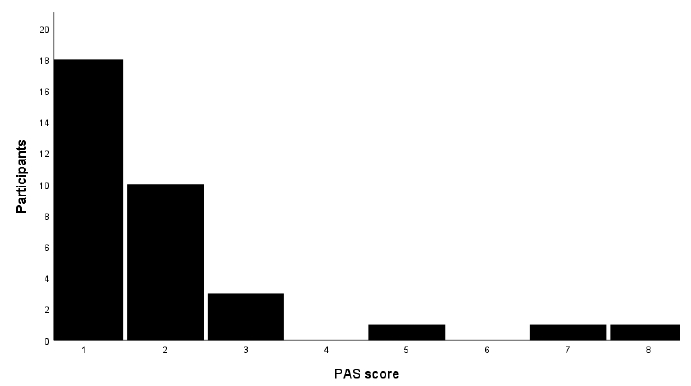 Figure 1Number of Participants Scoring Specific Number on the Penetration Aspiration Scale
Table 3 presents the multivariate regression model for the association between the PAS score groups and demographics and clinical characteristics. The PAS score, sex, length of stay and admission total FIM scores were significantly associated with functional recovery at the IRF discharge (all p values < .05). The post-hoc test revealed that there was a significant difference between PAS score 2 and PAS score 3~8 (mean difference = 14.33, 95% confidence interval 1.89, 26.77, p = .02; not in Table 3). While there was a difference between PAS score 1 and PAS score 3~8 (mean difference = 10.46, 95% confidence interval -1.10, 22.04), it was not statistically significant (p = .81; not in Table 3).
Ⅳ. Discussion
The study results show that the PAS was clinically feasible to administer to 34 stroke survivors during VFSS at our IRF. The PAS was not able to be scored with one participant secondary to the patient’s restless behavior. Therefore, there was a 97% successful rate for implementing the PAS with the study participants. The PAS was successfully implemented into the IRF setting as it was intended to be used, similar to other groups have done ([Borders & Brates, 2020;] [Bowen et al., 2009]).
The addition of the PAS provided more information to the VFSS results by including specific, measurable details about the characteristics of what is happening during the swallow. For example, as noted in the results and Table 1, a score of 2 indicates that the material that entered the airway, remained above the vocal folds and then was ejected from the airway. This detailed information quantifies the depth of the airway invasion, what material remains and the response to aspiration. Without use of the PAS score, a person with a PAS of “2” may be described as having a functional swallow or as having dysphagia, without clarifying information. Interestingly, we had no study participants with scores of four or six. This was also reported by others, suggesting that level six is exceptionally rare ([Kelly, Drinnan, & Leslie, 2007;] [Troche et al., 2014]).
As noted above, the multivariate regression model revealed that PAS scores (2 compared to 3~8) were significantly associated with functional recovery at hospital discharge. The association between the PAS and functional recovery at discharge suggests that stroke survivors with swallowing impairment have less functional improvement noted at discharge than those with better swallowing scores. Similar to our study, the presence of dysphagia during the acute phase of stroke was associated with poorer functional outcomes, even one-year post stroke ([Smithard, Smeeton, & Wolfe, 2007]). There was a nonsignificant p-value found for the association between PAS scores of 1 and PAS 3~8, which might be due to the small sample.
Additionally, length of stay was significant, which meant that a longer length of stay was associated with poor functional recovery, which has been supported in the literature ([Camicia, Wang, DiVita, Mix, & Niewczyk, 2016]). Similarly, there has been similar findings for sex differences in functional recovery post stroke ([Gargano, Reeves, & Paul Coverdell National Acute Stroke Registry Michigan Prototype Investigators, 2007]). Even though age was not significant in the regression, the study did recruit a group of stroke survivors who were mostly older adults. This was not a surprising finding since age is a risk factor for stroke ([Mozzafarian et al., 2015]). In addition, age-related diseases were found to be significant factors in the presence and severity of dysphagia due to the impact aging has on swallowing physiology ([Hind et al., 2001;] [Sura et al., 2012]).
We recognize two limitations to this study. First, the sample size was small due to restricted resources. Participant recruitment was dependent on available time from clinical staff, which may have limited maximum enrollment or resulted in selection bias. We recommend a larger sample size to validate the current findings. Second, there have been debated discrepancies in the statistical properties, specifically the construct validity of the PAS ([Steele & Grace-Martin, 2017]). A recent systematic review stated that researchers do not have a consensus on the statistical treatment of the PAS and therefore limits comparisons between clinical interpretation and reporting ([Borders & Brates, 2020]). Their suggestion was that until research has extensively examine the statistical properties, research studies should clearly define what statistical procedures were used such as whether the scale will be treated as ordinal variables ([Borders & Brates, 2020]).
In conclusion, this study adds to the literature supporting the clinical use of the PAS in the stroke population. SLPs and physicians who routinely use VFSS or work with people with dysphagia now have more information about the clinical feasibility of the PAS during standard care in an IRF setting. The analysis also suggested that stroke survivors with swallowing impairment had less functional recovery at discharge which can suggest that people with dysphagia may need additional services and care. This is extremely important information for practitioners such as occupational therapists and SLP who are seeing these types of clients daily in practice. We suggest that individual therapists and IRFs should implement a standardized assessment like the PAS to be able to quantify and track swallowing problems because of the impact we found on function recovery as well as the potential need for these individuals to need additional therapy services. Future research directions should include rigorous methods, larger sample size and additional analyses such as breaking down the FIM by item (i.e., Eating) and determine if there are any associations to swallowing function.